-
The BlogBiographies
-
Videos

June 20, 1780
In dense fog on June 20, 1780, patriots and loyalists fought a short but brutal battle on these grounds. Outnumbered three to one, Patriot forces prevailed against their Loyalist neighbors and family following short volleys and hand-to-hand combat over the future of North Carolina.
Ramsour's Mill
Here in Lincolnton, North Carolina you’re over 230 miles away from the devastation the British Army wrought on Charleston in May 1780, when they all but decimated the Patriot army in the south. The action here at Ramsour’s Mill one month later on June 20 was still in the shadow of that patriot defeat. For loyalists, Colonel John Moore and Major Nicholas Welch, however, the Battle of Ramsour’s Mill waged a little too close to home—pitting them against their neighbors in hand-to-hand combat. The Revolution wasn’t just ideas written on a piece of paper, it was a violent civil war. Here at Ramsour’s Mill, the home front became a turned battlefield, and neighbors turned into enemy soldiers.
Standing here, look across the east bank of Clark’s Creek. In 1780 that was farmland, and it’s where over 1,000 loyalists assembled under Moore and Welch and spent the night on June 19. They were local men and boys. Moore and Welch were from these parts too. They had planned to muster their loyalist militia and march in support of General Charles Cornwallis’s British Army. Sent to monitor the growing loyalist forces, patriot Colonel Francis Lock assembled a much smaller, but much more experienced collection of patriot militia just 16 miles northeast of here. Could 400 battle-hardened patriot militiamen take on 1,000 new loyalist recruits? The patriots planned to find out—at dawn.
At daybreak, dense fog filled the air. Lock’s small but combined force of patriot cavalry and infantry set out towards the loyalist camp, whose sentries posted up along their ridgeline position. Sighting the patriot advance, the sentries retreated, enticing the patriot cavalry directly into the main loyalist line which fired sharply and advanced. Navigating the fog and gun smoke, patriots reformed, and moved around the main line of loyalists. This forced the loyalists to retreat past the mill here. The loyalists outnumbered the patriots here by 3 to 1.
The fighting became so severe that when the combatants’ ammunition was spent, they used their guns as clubs. For the patriots, at least, help was on the way. Patriot Major William Richardson Davie arrived with reinforcements. And it was just enough. After 2 hours since the fighting broke out, the loyalists had enough. Colonel John Moore raised a flag of truce, and sent all able-bodied men home while he took stock of loyalist casualties. The patriots suffered, too. Brothers and neighbors had died fighting one another on opposing sides . Wives and mothers came from town to find their fallen kin. Others may still rest here in a nearby mass grave.
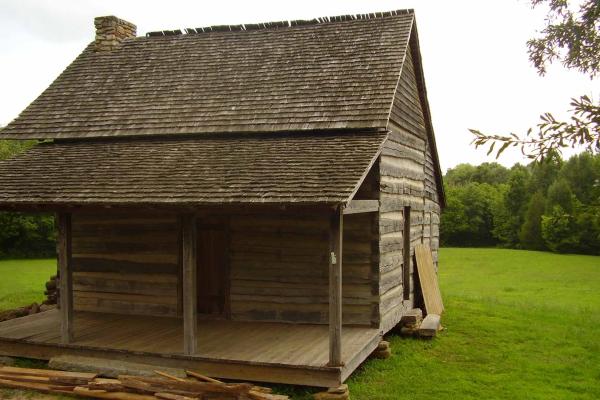
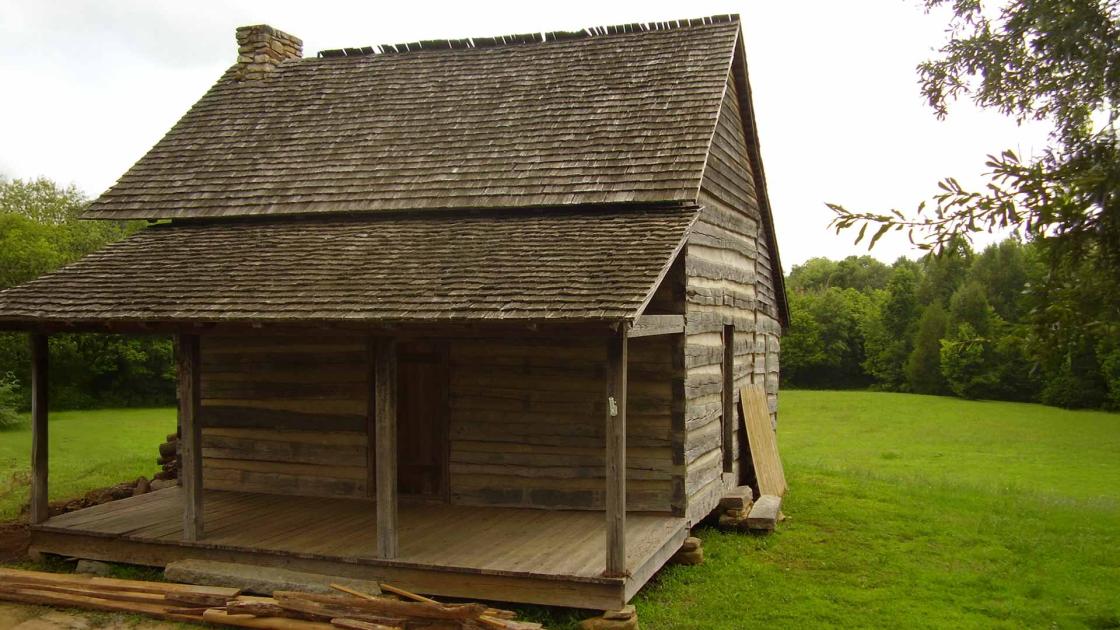
The interpretive signs near the cabin mark the locations of some of the men who died in the Battle of Ramsour’s Mill. Both loyalists and patriots remain buried on the hallowed ground, a reminder that the Revolution wasn’t just a declaration—it was a war.