-
The BlogBiographies
-
Videos

February 25, 1781
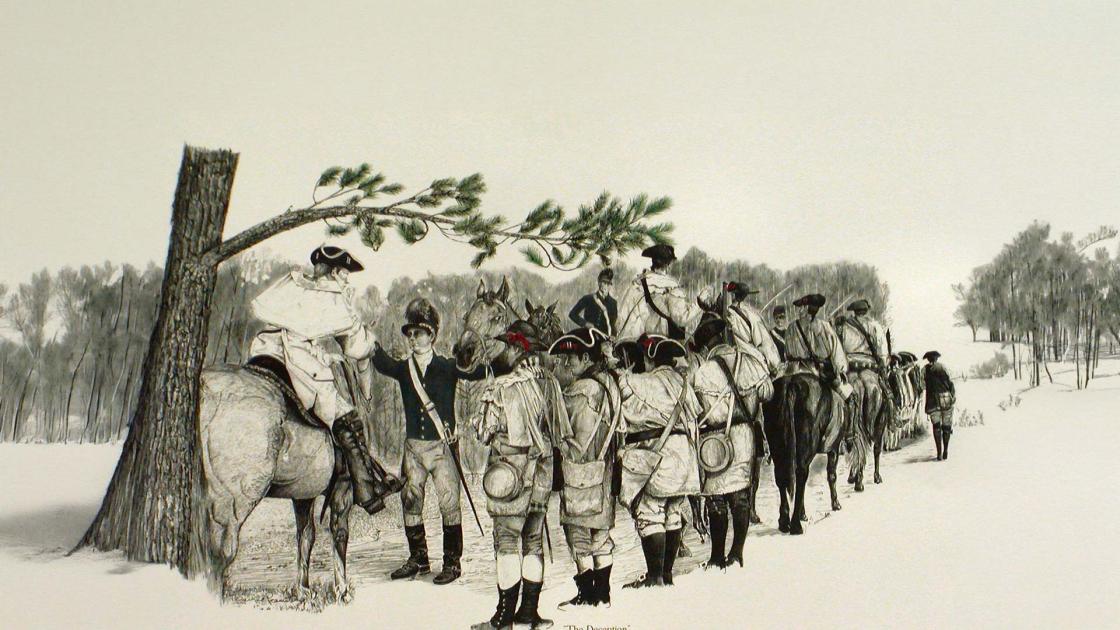
Patriot cavalry under Lieutenant Colonel Henry “Light Horse Harry” Lee ambushed Loyalist Colonel John Pyle’s militia in a daring ruse near Hillsborough, North Carolina. Mistaking Lee’s green-coated troopers for Banastre Tarleton’s men, Pyle allowed the patriots to ride straight into his ranks—only for a sudden, ten-minute melee to leave nearly a hundred Loyalists dead and their cause in the region shattered in what became known as Pyle’s Defeat.
Before You Go
Visitors may park at Splawn Belting, 1758 Anthony Road, Burlington, NC, 27215 and walk to the monument.
Disaster in North Carolina
The clashes of swords deafened the senses of the loyalist militia who frantically tried to make sense of the essential question- who is friend, who is foe? – as Patriots ambushed them. You’re standing in the vicinity of what was likely the smallest, but most decisive defeat of the American Revolution. In just ten minutes, a spur-of-the-moment ruse changed the whole course of the war in the South. It was a great moment for the patriot cause, but definitely not for Loyalist Colonel John Pyle. Think about the battle’s name: Pyle’s Defeat. How many other battles are so connected with the loser? So what actually happened to Pyle here on February 25, 1781? You’re on The Liberty Trail, and you’re about to find out.
But first, some backstory on the backcountry. Patriot General Nathanael Greene had spent the past month eluding General Charles Cornwallis’s British army. While Greene’s Army crossed the Dan River into Virginia, Cornwallis moved his exhausted force east to rest and hopefully recruit local Loyalists, arriving on February 20. But the day before, Patriot Lieutenant Colonel Henry “Light Horse Harry” Lee and his Legion – a combined unit of cavalry and infantry – crossed back into North Carolina. Lee’s goal? To unite with patriot militia from the Carolinas and Georgia under Colonel Andrew Pickens and keep an eye on the British. No rest for the weary, as they say.
On February 23, Cornwallis sent Lieutenant Colonel Banastre Tarleton into the countryside with his own mixed force to unite with Colonel John Pyle’s Loyalist unit and escort them to the British camp. And that same day, Lee and Pickens met up to begin a steady march toward the main British forces in Hillsborough. It wasn’t long before Lee learned that Tarleton was in the field and waiting for Pyle. He immediately recognized an opportunity to strike while the two forces were divided.
Now here’s where things get really interesting. Sometime after 5:00 p.m. on February 25, Lee’s advance party met up with a member of Pyle’s command. He told the patriots everything they needed to know— including the location of Pyle’s loyalist militia—because he mistook the patriots for members of his own loyalist regiment. Lee realized something critical: his patriot cavalry sported green jackets that looked very similar to the uniform Tarleton’s loyalists wore. Lee decided to use this glaring detail to lull Pyle into unassuming security.
Lee sent one of his green-clad officers ahead to make contact with Pyle. The fraudulent officer asked Pyle to move to the right of the road to allow Lee’s green-uniformed men to pass. The gamble worked. The patriots approached close enough for Lee himself to come face to face with Pyle, and stretched out a hand to seal the ruse—and Pyle’s fate.
Suddenly, hand-to-hand combat erupted. Lee’s men cut and slashed away at the loyalists, who didn’t even have time to comprehend what was happening or why. In the confusion, Pyle attempted to make sense of the situation, shouting to Lee “You are killing your own men!” For 10 minutes a chaotic melee of green and horses swirled, leaving 99 loyalists dead and dying.
But did this confusing clash happen right here at this monument? Historians aren’t exactly sure. The gravel drive near you might actually be part of the original roadbed that witnessed the short and bloody action. If you’re feeling adventurous, travel northeast along Henry Road for about a mile and find Fellowship Baptist Church—some research suggests that the battle occurred closer to that spot. Either way, the clash we know today as Pyle’s Defeat saw Pyle himself escaping with what remained of his command, taking with them any lingering hopes that the British Army had Loyalist support in North Carolina.